The History of Money · 2 min read
The First Coins: Metal You Could Count
How standardized metal coins began in ancient Lydia, why stamped coins made trade easier, and how coinage spread across the world.
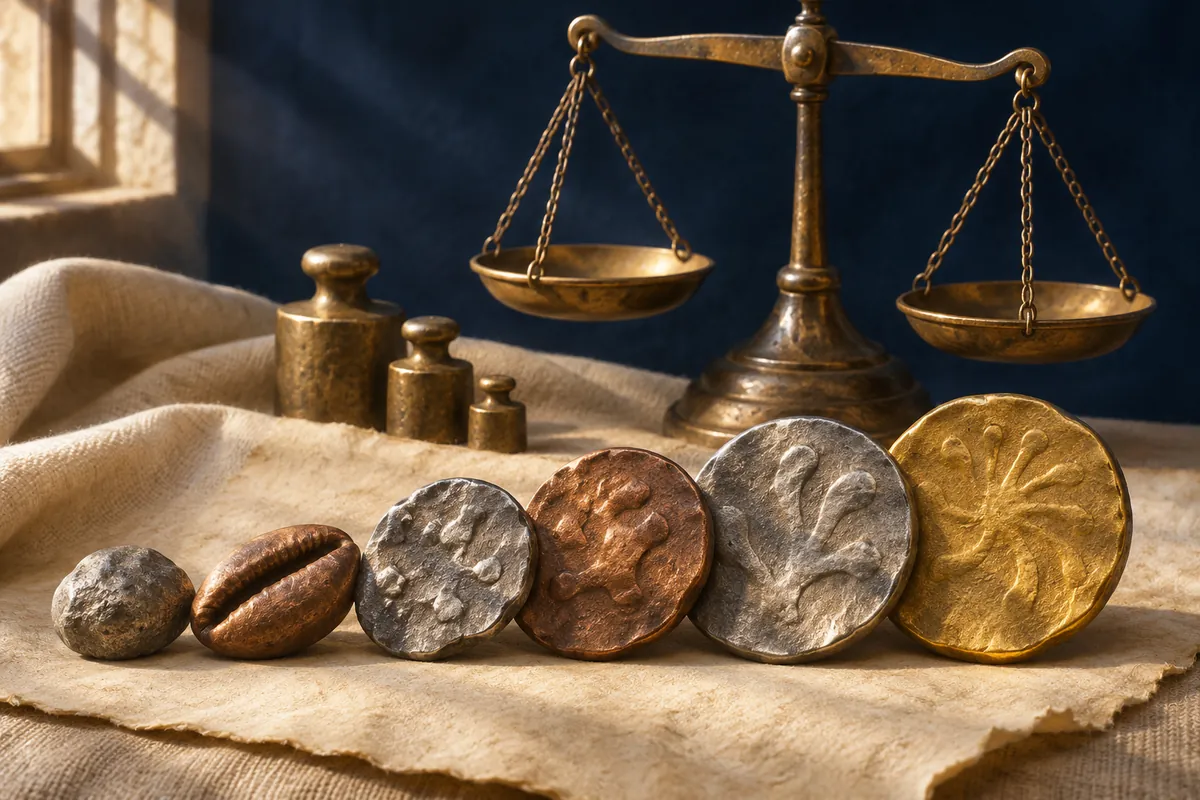
Metals like gold, silver and copper made excellent money: they last, they can be divided and a little carries a lot of value. But early traders had to weigh metal every time, often using a balance scale, and check that it was pure.
Stamped coins
Historians generally credit the kingdom of Lydia, in what is now western Turkey, with producing some of the first standardized coins around the 7th century BC. Made of electrum, a natural mix of gold and silver, they carried an official stamp. The stamp was a promise: this piece has a known weight and value. Now people could count coins instead of weighing metal.
Coins spread
Greek city-states, Persia, Rome, India and China all developed their own coinage. Rulers put their faces and symbols on coins, which also made money a tool of power and identity.
Debasement: an early warning
Some rulers secretly mixed cheaper metal into coins to make more of them. Over time, people noticed, and prices rose. It was an early lesson in what we now call inflation: when the money supply grows faster than what it can buy, each coin buys less.
Want to hold history in your hand? Collecting coins is a hands-on way for families to explore it. See our resources for trusted coin and bullion dealers.
Updated November 15, 2026. General education only, not financial advice.