The History of Money · 2 min read
Before Money: Barter and Early Trade
How people traded before money existed, why barter was hard, and how shells, grain and livestock became the first forms of money.
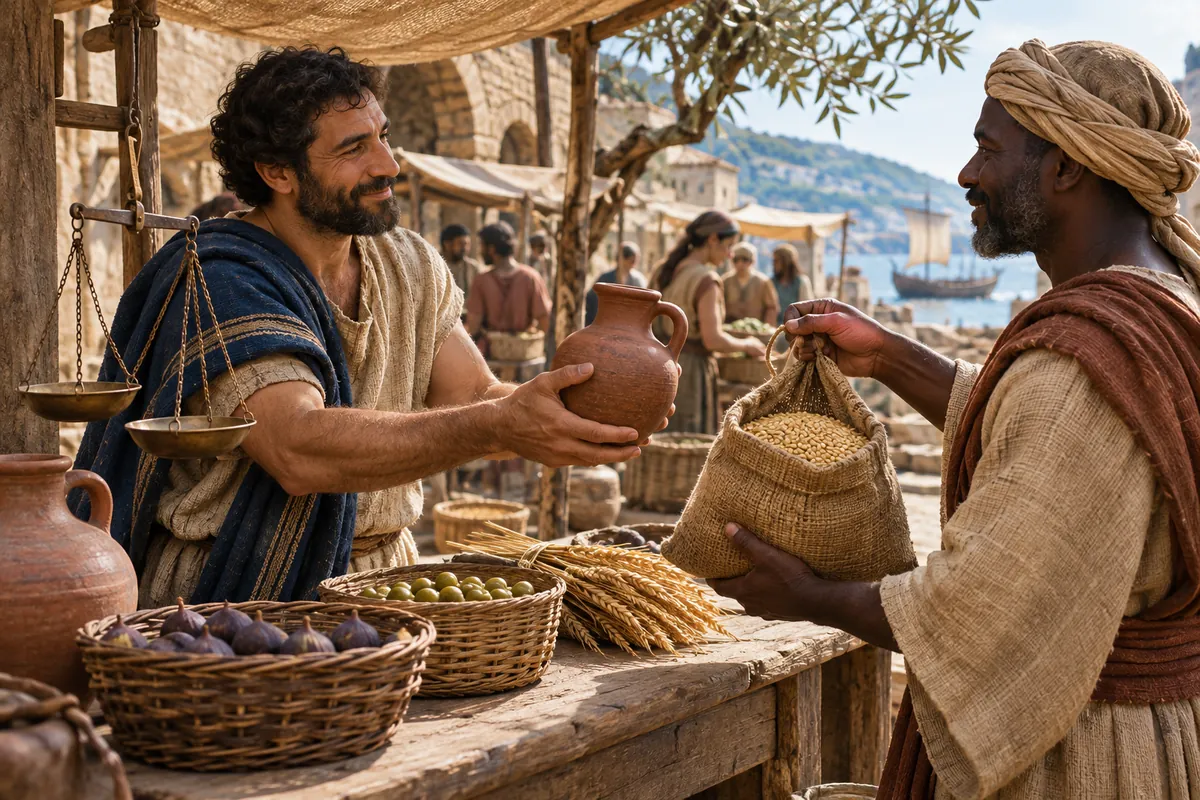
Long before coins or paper, people still needed to trade. A farmer with extra grain might need a clay pot; a potter might need grain. Swapping one good directly for another is called barter.
The problem with barter
Barter works only when both people want what the other has at the same moment. Economists call this the double coincidence of wants. If the potter doesn't need grain today, the farmer is stuck. Barter also struggles with value: how many baskets of grain equal one goat? And you can't easily split a goat to make change.
Commodity money
To solve these problems, communities around the world settled on goods almost everyone valued and that were easy to count or carry. Grain, salt, livestock, beads and cowrie shells all served as early money in different places. Cowrie shells were used across parts of Africa and Asia for centuries because they were durable, hard to fake and easy to count.
The big idea
Money works because people agree it has value and trust that others will accept it. That idea, money as shared trust, runs through the whole story, all the way to digital payments.
Updated November 15, 2026. General education only, not financial advice.